
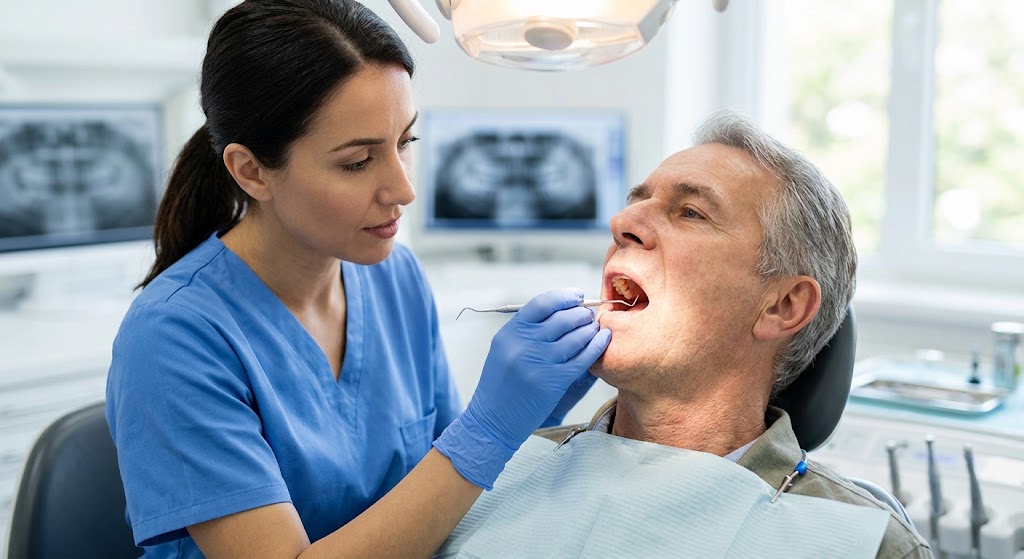
A cavity can still form underneath a dental crown because the underlying natural tooth structure and root remain susceptible to bacterial decay. While the ceramic or porcelain crown itself cannot rot, bacteria and plaque can infiltrate the margin where the crown meets your gumline. If the dental cement breaks down or plaque builds up along the margin, decay can quietly spread beneath the restoration.
At All About Teeth, we evaluate existing crowns during routine checkups using digital imaging to catch underlying decay early and preserve your natural tooth structure.
Quick Summary: Decay Beneath Crowns At-a-Glance
- The Vulnerable Spot: The margin where the crown meets the natural tooth root is the primary entry point for bacteria.
- Watch for Warning Signs: Sensitivity to temperature, pain when chewing, or gum swelling indicate potential underlying issues.
- Early Intervention Matters: Catching margin decay early prevents the need for root canal therapy or tooth extraction.
- Prevention Strategy: Daily interdental cleaning, fluoride toothpaste, and routine dental exams protect the structural seal.
How Decay Develops Beneath a Crown
A dental crown acts as a protective helmet over a natural tooth that has been prepared due to prior damage or decay. However, a crown does not make the underlying tooth immortal.
Definition: Crown Margin & Recurrent Decay
The crown margin is the precise border where the bottom edge of the artificial crown meets the natural tooth tissue at or just below the gumline. Recurrent decay (or secondary caries) occurs when bacteria penetrate this margin, eroding the dentin and root structure beneath the restoration.
Over time, natural wear, gum recession, or microscopic washouts of the dental cement create tiny gaps. Plaque bacteria slip into these micro-crevices, feeding on sugars and producing acids that dissolve the natural tooth hidden inside the crown.
Healthy Crown Margin vs. Vulnerable Crown Margin
Understanding the structural state of your crown helps you catch problems before they lead to severe tooth pain:
| Feature | Healthy Sealed Crown Margin | Vulnerable / Deteriorating Margin |
| Cement Seal | Intact, flush barrier preventing bacterial entry. | Degraded, washed out, or micro-fractured. |
| Gum Tissue Status | Firm, pink tissue framing the crown base tightly. | Receding gums, inflammation, or localized bleeding. |
| Sensation | Zero pain during biting, temperature changes, or sweet foods. | Sharp zingers, lingering sensitivity, or dull aching. |
| Radiographic Appearance | Smooth, continuous junction on digital x-rays. | Shadowing or dark voids beneath the crown edge. |
4 Warning Signs of a Cavity Under Your Crown
Because a crown covers the visible portion of the tooth, decay underneath can develop silently. Watch for these key indicators:
New Sensitivity to Hot, Cold, or Sweets: Lingering discomfort when enjoying hot coffee or ice water means bacteria may have reached the dentin or nerve underneath.
Pain When Biting or Applying Pressure: Discomfort when chewing often indicates that decay has reached the inner pulp or caused inflammation around the tooth root.
Redness, Swelling, or Bleeding at the Gumline: Inflammation around a specific crowned tooth suggests plaque accumulation along a compromised margin, leading to localized gum disease.
A Loose, Unstable, or Shifting Crown: If the crown feels like it is moving or clicking when you bite, the internal tooth structure may have softened due to decay, destroying the cement hold.
Preventative Measures & Treatment Options
How to Protect Your Crown at Home
- Clean the Margin Daily: Brush thoroughly at a 45-degree angle toward the gumline, and use string floss or an interdental cleaner daily around the base of the crown.
- Strengthen Enamel with Fluoride: Use prescription or over-the-counter fluoride toothpaste to strengthen exposed root surfaces along the margin.
- Avoid Sticky, Sugary Treats: Sticky candies can pull on crown edges and wedge sugar directly into microscopic margin gaps.
What We Do If Decay Is Discovered
If Dr. Corey Hogge identifies a cavity beneath your crown during an exam:
Minor Margin Decay: If caught very early at the outer edge, we may be able to clean and patch the small area with a tooth-colored composite resin.
Advanced Underlying Decay: If decay has spread beneath the body of the restoration, the old crown must be removed, the decayed tooth structure cleaned away, and a new, custom-fit crown placed.
Nerve Involvement: If the decay reaches the nerve pulp, we will perform a comfortable root canal treatment to eliminate the infection before restoring the tooth with a new crown.
Crown Cavity FAQs
Can you see a cavity under a crown on a dental x-ray?
Yes. While metal or porcelain-fused-to-metal crowns block x-rays from seeing directly through the cap, digital x-rays clearly show the natural tooth root and the margins underneath, allowing us to spot shadow voids caused by decay.
Do I have to replace my crown if I get a cavity under it?
In most cases, yes. To guarantee that all bacteria and decayed tooth structures are completely removed, the old crown usually must be taken off. Once the tooth is healthy again, a new crown is fitted over the prepared natural tooth.
Why does my crowned tooth hurt when I bite down?
Biting pain can indicate a cavity beneath the crown, an inflamed nerve requiring a root canal, or a high spot on the crown that needs a simple bite adjustment. An evaluation at our Logan office will pinpoint the exact cause.
How long does a typical dental crown last?
A well-maintained crown typically lasts 10 to 15 years or longer. Longevity depends heavily on diligent home hygiene around the gumline and wearing a custom night guard if you grind your teeth.
Can a same-day CEREC crown prevent cavities better?
Same-day CEREC ceramic crowns offer an exceptionally precise digital fit. A tighter initial fit reduces microscopic margin gaps where bacteria like to hide, helping protect your underlying tooth.
How often should I have my crowns checked by a dentist?
You should have your crowns inspected during your routine bi-annual checkups. We examine the structural seal of every restoration during your regular cleanings to catch minor margin wear before it turns into a cavity.
At All About Teeth, our primary goal is to help you protect your natural teeth and extend the life of your dental work. We “Cater to Cowards” by providing gentle, upfront, and comprehensive care for all your restorative needs. If you suspect a problem with an existing crown, do not wait for it to hurt. Contact us today to schedule an evaluation!
By: The All About Teeth Team
Last Updated: September 10, 2026
Credentials: Leading family and restorative dental providers in Logan, UT, with over 25 years of experience in advanced crown technology and preventative care.
Recent Comments