
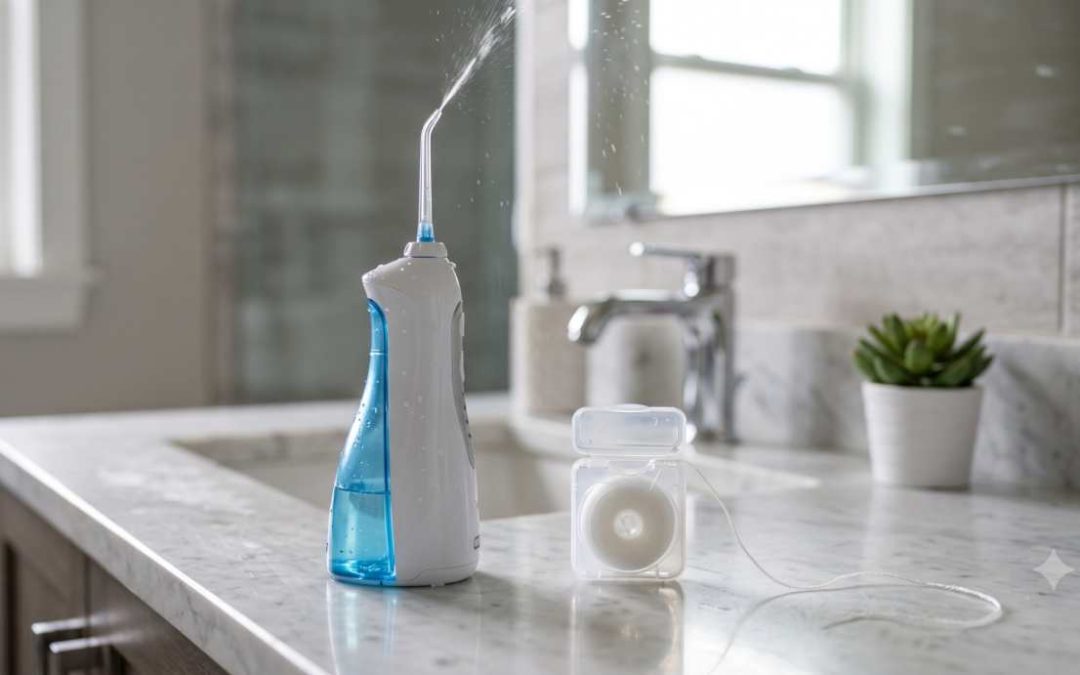
Both water flossers (oral irrigators) and traditional string floss effectively remove food particles and disrupt plaque between your teeth, but they work in fundamentally different ways. String floss uses physical scraping to lift sticky biofilm from tight tooth contacts and under the gumline, while a water flosser uses pressurized water to flush away debris and bacteria from sensitive gums or hard-to-reach dental restorations.
At All About Teeth, we believe the best interdental cleaner is the one you will actually use every single day.
Choosing the Right Interdental Tool
- Best for Tight Contacts: String floss provides superior mechanical scraping to strip sticky plaque between crowded teeth.
- Best for Dental Work: Water flossers excel at rinsing around braces, implants, and fixed dental bridges.
- Best for Sensitive Gums: The soft, pulsing stream of a water flosser cleans deeply without causing gum bleeding or irritation.
- The Ultimate Strategy: Combining both methods gives you maximum protection against gum disease and decay.
Understanding Mechanical Scraping vs. Hydrodynamic Rinsing
Brushing alone only cleans about 60% of your tooth surfaces. The remaining 40% sits in the tight interdental spaces where your toothbrush bristles simply cannot reach.
Definition: Biofilm & Interdental Cleaning
Dental biofilm (plaque) is a sticky, invisible matrix of bacteria that adheres tightly to enamel and beneath the gumline. Removing it requires either mechanical friction (scraping it off with string floss) or hydrodynamic pressure (pulsing water to flush out bacteria and toxins).
Leaving this biofilm undisturbed leads to enamel decay between teeth and triggers inflammation that causes bleeding gums and early gingivitis.
Water Flosser vs. Traditional String Floss
Understanding how each tool performs helps you tailor your daily routine to your unique mouth structure:
| Feature | Water Flosser (Oral Irrigator) | Traditional String Floss |
| Cleaning Mechanism | Pressurized, pulsing water stream. | Physical friction and scraping action. |
| Plaque Removal Style | Flushes loose debris and bacterial toxins out of deep pockets. | Scrapes sticky, hardened biofilm directly off enamel surfaces. |
| Ease of Use around Braces/Implants | Exceptional: Easily rinses around brackets, wires, and posts. | Difficult; requires specialized threaders or superfloss. |
| Gentleness on Gums | Extremely gentle; customizable pressure settings soothe tissue. | Can cause snapping or tissue bleeding if forced aggressively. |
| Portability & Maintenance | Requires electricity/batteries and reservoir cleaning. | Highly portable, inexpensive, and requires zero power. |
Pros and Cons of a Water Flosser
Water flossers use targeted water pressure to rinse out the tight spaces between teeth and below the gumline.
The Benefits
- Gentle on Inflammation: If you suffer from tender or receding gums, the pulsing water massages the tissue while removing bacteria without painful friction.
- Ideal for Dental Work: Water flossers easily clean around complex restorations like dental implants, fixed bridges, and orthodontic brackets that trap food easily.
- Reaches Deep Pockets: Water streams can penetrate deeper into periodontal pockets than string floss can safely reach.
The Drawbacks
- Less Friction: Water alone does not always scrape off sticky, tightly bound plaque as thoroughly as string floss.
- Setup & Maintenance: Devices require counter space, access to power, and regular reservoir cleaning to prevent mold or mineral buildup.
Pros and Cons of Traditional String Floss
Traditional string floss remains the classic standard for interdental cleaning across the dental industry.
The Benefits
- Unmatched Friction: Physical string physically scrapes sticky plaque off the sides of teeth before it can harden into tartar.
- Precision Control: Allows you to wrap the string in a “C-shape” around each tooth to clean thoroughly beneath the gum margin.
- Ultimate Convenience: Highly portable, inexpensive, and easy to use anywhere without power or water setup.
The Drawbacks
- User Technique Dependent: Incorrect technique—such as snapping the string down hard into the gums—can cause tissue trauma and bleeding.
- Challenging for Complex Work: Navigating string around orthodontic wires, bridges, or tight contact points can be frustrating and time-consuming.
Why Using Both Delivers the Ultimate Clean
You don’t necessarily have to choose one over the other. Combining both methods gives you the most thorough at-home hygiene routine possible:
- Start with String Floss: Use string floss first to break the tight seal of sticky biofilm between your teeth and scrape the contact points clean.
- Finish with the Water Flosser: Follow up with your water flosser to flush away all the loosened debris, rinse out deep gum pockets, and massage your gum tissue.
This two-step approach ensures that sticky plaque is physically disrupted and completely washed away before it can harm your enamel or gums.
Interdental Hygiene FAQs
Can a water flosser completely replace traditional string floss?
While a water flosser is a fantastic alternative for individuals who struggle with dexterity or have extensive dental work, traditional string floss still provides superior physical scraping for tight tooth contacts. Using both together yields the best results.
Will using a water flosser make my gums bleed?
If your gums are inflamed from plaque buildup, they may bleed slightly during your first few days of using a water flosser. However, as the device flushes out bacteria and your gum health improves, the bleeding should stop completely.
What setting should I use on my water flosser?
Always start on the lowest pressure setting, especially if your gums are sensitive. Gradually increase the pressure to a comfortable medium level as your gum tissue becomes healthier and stronger.
Is string floss or a water flosser better for kids?
Kids with braces often find water flossers much easier and more fun to use than maneuvering floss threaders. For general daily care, incorporating proper children’s dental health habits with either tool will keep their developing smiles cavity-free.
Can I put mouthwash in my water flosser reservoir?
Yes! Adding a small splash of alcohol-free, antibacterial mouthwash to the warm water in your reservoir can provide an extra boost of fresh breath and help kill hidden oral bacteria.
How often should I get a professional dental cleaning?
Even with flawless home flossing, hardened tartar can only be safely removed with professional tools. Visiting us twice a year for routine dental cleanings keeps your gums firm and your teeth completely plaque-free.
At All About Teeth, we believe in helping you build a simple, effective home care routine that fits your lifestyle. Whether you prefer traditional string floss, a modern water flosser, or a combination of both, our team is here to support your journey toward a healthy smile. Contact us today to schedule your next family checkup in Logan!
By: The All About Teeth Team
Last Updated: August 7, 2026
Credentials: Leading family and preventative dental providers in Logan, UT, dedicated to compassionate, personalized oral hygiene education for over 25 years.
Recent Comments