
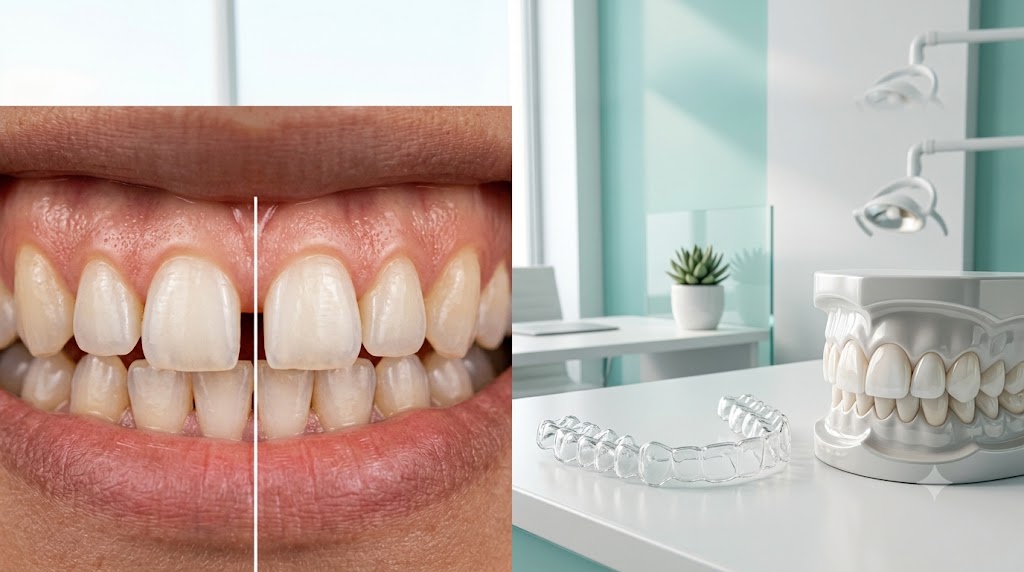
To fix a tooth gap, options vary depending on whether the space is a natural developmental trait or the result of a missing tooth. For natural spaces, cosmetic options like porcelain veneers or composite dental bonding offer immediate correction, while clear aligners can physically shift the teeth. If the gap stems from a missing tooth, restorative options like dental implants or fixed bridges are necessary to preserve your health.
At All About Teeth, we look at the size, cause, and location of your tooth gap to deliver a personalized solution that elevates both your confidence and your bite function.
Methods to Close Tooth Gaps
- Address Spacing Discrepancies: Veneers or bonding instantly widen teeth to cleanly mask small gaps.
- Physically Realign the Smile: Clear aligners gently shift teeth into an even, gap-free sequence.
- Replace Missing Teeth Permanently: Implants provide a highly durable, standalone replacement root and crown.
- Bridge Structural Gaps: Fixed bridges use surrounding teeth as stable anchor supports for missing spaces.
Understanding Tooth Gaps: Aesthetic vs. Structural Risks
Some people carry a small tooth gap (known as a diastema) with absolute confidence. However, when a gap doesn’t align with your aesthetic goals, or if it is a large space left behind by a missing adult tooth, it poses genuine risks to your long-term oral health.
Definition: Diastema & Structural Drifting
A diastema is a natural space or gap between two teeth, most commonly visible between the front two incisors. When large gaps are left unaddressed—particularly from missing teeth—the surrounding teeth lose their structural boundary and naturally begin drifting into the empty space, altering your bite alignment.
Leaving severe spaces open changes the way your teeth meet when you chew, placing unnecessary stress on your jaw joint and potentially escalating into painful symptoms of TMJ. Furthermore, gaps create hidden pockets where plaque can accumulate, raising your risk for bleeding gums and localized gum disease.
Cosmetic Solutions vs. Complete Tooth Replacements
Choosing the ideal procedure depends heavily on whether your gap is a cosmetic spacing issue between existing teeth or an empty space from a lost tooth:
| Option | Primary Medical Purpose | Required Treatment Time | Lifespan Expectancy |
| Porcelain Veneers | Cosmetic masking of natural gaps between existing teeth. | 2 – 3 Visits over a few weeks. | 10 – 15+ Years |
| Dental Bonding | Fast repair for minor chips or small spacing issues. | 1 Single visit. | 5 – 7 Years |
| Clear Aligners | Full orthodontic movement to close gaps naturally. | Several months to a year. | Permanent (With retainer wear) |
| Dental Implants | Structural replacement for a missing tooth from the root up. | Multi-stage over a few months. | Lifetime (With proper care) |
| Dental Bridges | Replacing missing teeth using neighboring anchors. | 2 Visits. | 7 – 15 Years |
8 Proven Methods We Use to Fix Your Tooth Gap
1. Porcelain Veneers
For an absolute transformation, porcelain veneers are custom-fabricated ceramic shells bonded directly to the front of your teeth. We custom-tint and shape them to widen your existing teeth beautifully, closing the gap while providing a highly stain-resistant, natural-looking surface.
2. Composite Dental Bonding
If you want a fast, conservative solution for a small gap, composite bonding is an exceptional tool. We apply a tooth-colored composite resin directly to the edges of your teeth to comfortably reshape them. Our team sculpts the resin in a single appointment, making it a highly accessible, minimally invasive option.
3. Traditional Braces
For large spacing discrepancies or complex bite misalignments, traditional orthodontic braces offer unparalleled control. They apply steady, controlled pressure to physically guide your teeth into a balanced, gap-free alignment over time.
4. Clear Aligners
If you prefer a highly discreet alternative to metal brackets, clear aligners are an excellent choice. By utilizing a progressive series of clear, removable plastic trays, aligners systematically move your teeth into position, allowing you to close your smile gaps without altering your daily appearance or diet.
5. Dental Implants
When a gap is caused by a missing tooth, a dental implant is the gold standard for restoration. By placing a surgical titanium post directly into the jawbone, we simulate a natural tooth root. This stabilizes the jaw bone structure and is topped with a premium crown, creating a completely standalone, lifelong replacement.
6. Dental Crowns
If the teeth on either side of your gap are heavily worn, uneven, or structurally decayed, a porcelain dental crown can resolve multiple problems simultaneously. A crown encapsulates the entire visible tooth structure down to the gumline, renewing its strength while expanding its width to close the empty space.
7. Fixed Dental Bridges
A bridge utilizes an artificial tooth suspended between two customized crowns anchored directly to your adjacent healthy teeth. This bridges the physical gap cleanly and prevents your remaining teeth from shifting out of place, offering a durable solution without requiring jaw surgery.
8. Removable Partial Dentures
For patients managing multiple scattered gaps from missing teeth, a partial denture provides a highly functional, cost-effective, and removable appliance. It clasps securely onto your remaining teeth to restore full chewing capability and a natural look.
Gap Correction FAQs
Can dental bonding close a large gap between front teeth?
Bonding is ideal for small to moderate gaps. If a gap is exceptionally wide, using composite resin alone can make the two front teeth look unnaturally broad. In those situations, porcelain veneers or clear aligners usually yield a more balanced aesthetic.
Will closing a tooth gap improve my speech?
Yes. Large gaps, particularly near the front of the mouth, allow air to escape abnormally while speaking, which frequently causes a noticeable lisp. Closing the space restores proper tongue placement against the teeth for clearer pronunciation.
How long does it take to close a gap with clear aligners?
Minor spacing gaps can occasionally be resolved in as little as 4 to 6 months. More extensive spacing issues involving full bite adjustments will take longer. A digital evaluation at our office will provide a precise timeline.
Why shouldn’t I just leave a missing tooth gap alone?
Without a tooth root to stimulate the area, your jawbone will gradually shrink (resorb) over time. This loss of structural bone causes neighboring teeth to tip into the gap, causing bite changes and contributing to a prematurely aged facial structure.
How do I know which gap treatment is right for me?
The best approach depends entirely on the size of the space, the health of the surrounding teeth, and your personal goals. During a comprehensive exam, we will map out your options clearly so you can select the solution that fits your life.
At All About Teeth, our primary goal is to provide upfront, compassionate, and high-quality care to families across Logan, Utah. Whether you seek to fix a gap for cosmetic balance or need to restore a missing tooth to protect your bite, our experienced team is here to guide you toward a healthy smile. Contact us today to schedule your smile consultation!
By: The All About Teeth Team
Last Updated: July 14, 2026
Credentials: Leading family, cosmetic, and restorative dental care providers in Logan, UT, with over 25 years of experience in custom smile makeovers.
Recent Comments